

Quick answer: how many people to make a puzzle game depends on scope, but a solo developer or a small team can ship one if design, code and art are all covered. Contract the rest.
This guide maps the roles a puzzle game needs and which to keep in-house. It sits within the wider topic of indie puzzle game development, which covers the other stages of a puzzle project.
Choosing a team size for a puzzle game
An indie game studio is usually a small team working with a limited budget, according to Triplano’s overview of game development timelines. Headcount is therefore a trade between money, time and the number of roles each person can credibly hold. Four criteria settle most decisions.
- Scope of the puzzle set. A game built around a single mechanic with a modest level count needs fewer specialists than one with several mechanics, bespoke art and a large content pipeline.
- Time you can afford. The same source says indie games typically take a year or two, and small teams or solo developers often take over a year. If you cannot fund that long, add people or shrink the scope rather than hoping to move faster alone.
- Skills you already hold. A designer who can also script in the chosen game engine removes a hand-off. A gap in art or audio is the usual reason to bring in a contractor.
- Budget for coordination. More people means more communication. The same overview notes that coordinating a large team presents challenges, which makes project management crucial.
Treat these as a checklist before you recruit anyone. The next section compares the setups that most small puzzle projects end up with.
Team setups compared
| Setup | Who covers design, code and art | Main trade-off | Planning use |
|---|---|---|---|
| Solo developer | One person handles every role | Takes longer because of the multitude of roles; often over a year | Suits a tightly scoped puzzle idea and a founder who can wait |
| Small core team | Designer, programmer and artist are separate people or close to it | Division of labor speeds delivery, but coordination effort grows | Suits a larger level count or a polished look on a limited budget |
| Core team plus contractors | Core covers design and code; art or assets are partly external | Pre-made or outsourced assets save time versus building everything from scratch | Suits teams with a clear design but thin art capacity |
The comparison draws on the roles, timelines and asset-saving points in Triplano’s guide to game development time, team and tools.
Choose the solo route only when the schedule is flexible. Choose a core team when you want to shorten the schedule, and add contractors when a single skill, usually art, is the bottleneck.
Roles a puzzle game needs
A puzzle game still needs a game designer, a game programmer and a game artist, even when one person holds all three titles. What differs from other genres is where the effort concentrates. The weight sits on rule design and level construction rather than on large worlds or character animation.
Game designer
The designer owns the rules, the progression of puzzles and the reasoning behind each level. In a puzzle game this is the role that determines whether the product is good, so it is the one to protect. A designer who wants players to find several valid routes should read about open ended puzzle design multiple solutions before committing to a level format, because that choice affects the programmer’s validation work too.
Game programmer
The programmer implements the mechanics, the level loading and the save and input handling inside the game engine. According to the Triplano overview, engines such as Unity or Unreal Engine can dramatically speed up development. For a small team, adopting an existing engine is almost always a better use of programmer time than writing foundations from scratch.
Game artist
The artist makes the visuals players read the puzzle through. Clarity matters more than spectacle here, because players must tell pieces, states and goals apart at a glance. The same source says pre-made assets can save time compared with creating every asset from scratch, so an artist can spend effort on the visual identity and the key puzzle pieces rather than on every background.
Support roles
Sound, testing and production management also need an owner. In a very small team, assign them to existing people explicitly instead of leaving them as everyone’s responsibility. Testing in particular benefits from a named person, since how to measure puzzle difficulty depends on someone collecting and reading the results consistently.
Working as a solo developer
A solo developer can make a puzzle game alone, but the project will probably run long. Triplano reports that small teams or solo developers often take over a year because of the multitude of roles they must handle.
Solo work suits a developer who is strong in design and programming and willing to lean on engine features and pre-made assets for everything else.
If you go solo, protect the schedule by cutting scope early. A smaller set of well-tuned puzzles is easier to finish than an ambitious one, and contractors can be added later for the polish that you cannot do yourself.
What to keep in-house and what to contract
Keep puzzle design in-house and consider contracting art, audio and specialist polish. Design carries the identity of a puzzle game and needs constant iteration, which is awkward to run through an external contract. Art can be delivered against a clear brief, and pre-made assets are a cheaper alternative where a unique look is not essential.
- Keep in-house: puzzle rules, level order, the core game feel and the final say on difficulty.
- Good candidates to contract: character or tile art, interface graphics, music and sound effects, and trailer or store-page material.
- Buy instead of commission: generic backgrounds, icons and sound libraries, in line with the saving from pre-made assets described in the Triplano overview.
Finding freelancers
For game developer freelancers, where to find them is mostly a matter of freelance marketplaces, portfolio sites and game development communities. Whichever you use, judge the candidate by finished work that resembles what you need rather than by a general reputation.
Ask for samples that match your art direction, agree what files you will receive and confirm that the work will fit your engine. A small paid test task is a reasonable way to see how a freelancer communicates before committing to the whole job.
Splitting work and communicating
A small team should split work by role ownership, with one named person accountable for each area. The Triplano overview observes that large teams can expedite development thanks to the division of labor, which is the argument for separating design, code and art even when the team is compact.
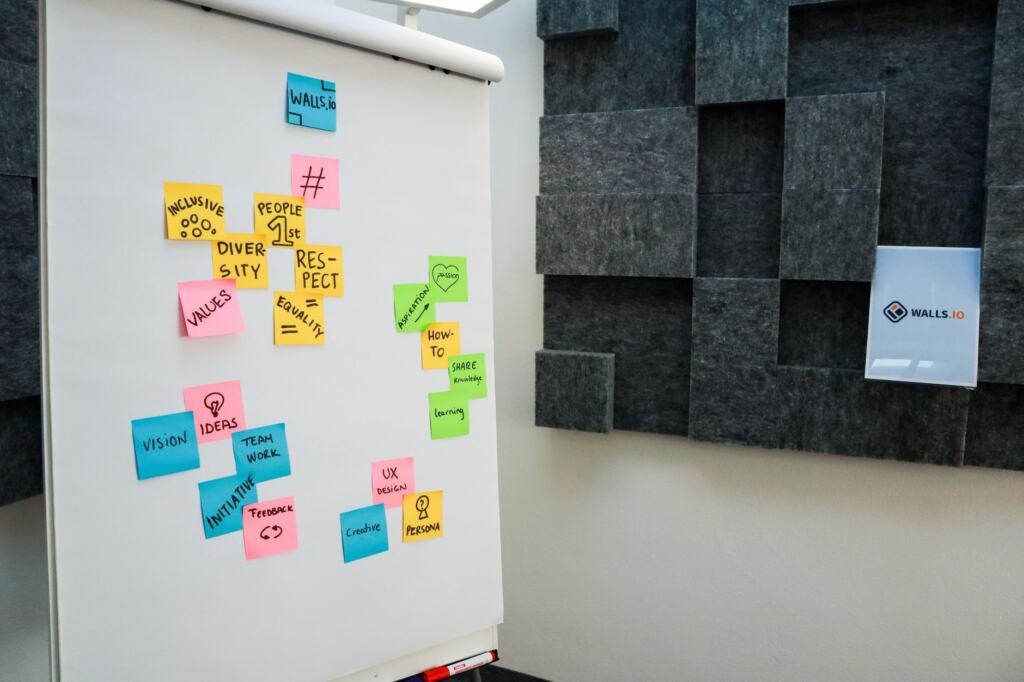
Start with a short planning session. Write each major task on a note, place it under the owner, and mark which tasks depend on someone else. Revisit the board when the plan changes so it stays a record of who is doing what.
- Single owner per area: shared ownership slows decisions when people disagree about a puzzle’s design.
- Short, regular check-ins: they keep contractors and core members aligned without long meetings.
- Written decisions: record rule changes and art direction where everyone, including contractors, can read them.
Indie studio workflow and project management
A flexible method suits a small studio better than a heavy plan. Triplano notes that Agile methodologies, such as Scrum, are more flexible and adapt well to changes, which matches puzzle development, where playtesting regularly changes the level list. The same source describes PMBOK as beneficial for larger projects with clear, unchanging objectives, so it is rarely the right fit for a small puzzle team that expects to revise its design.
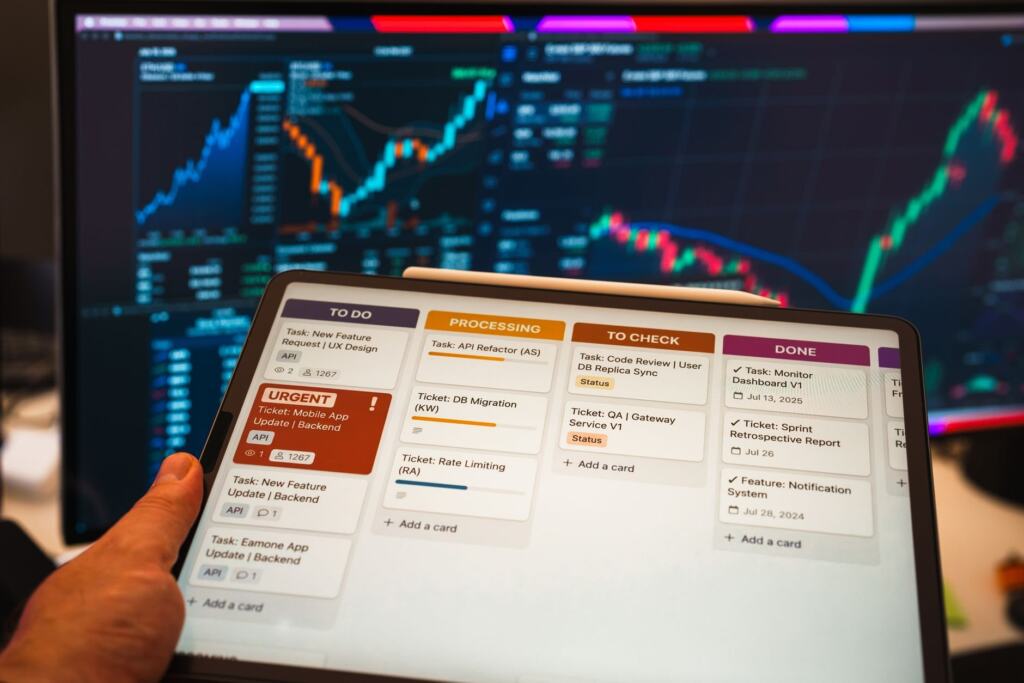
A shared task board is enough for most small studios. Keep a backlog of puzzles, features and art requests, move items through clear stages and include a review stage so nothing is marked finished before another person has tried it. When a puzzle reaches review, test it with real players and record the result, following the approach in how to measure puzzle difficulty.
Troubleshooting a stalled team
- The project keeps running long. Check whether one person is covering too many roles. This is the pattern Triplano links to longer timelines for small teams and solo developers, so move a role to a contractor or cut scope.
- Art is blocking progress. Replace custom assets with pre-made ones for non-essential elements and keep custom work for the pieces players interact with.
- Decisions are slow. Name a single owner for design and let that person settle disputes about puzzle rules.
- Contractors deliver the wrong thing. Tighten the brief, share reference images and review early drafts before the full delivery.
- Coordination eats the week. Reduce the number of channels and meetings, and move status updates onto the task board.
Frequently asked questions
How many people do you need to make a puzzle game?
There is no fixed headcount. Indie games are usually made by smaller teams with limited budgets, so the real requirement is that design, programming and art each have a capable owner, whether that is a separate person or the same one.
Can one person make a puzzle game alone?
Yes. The cost is time: solo developers often need over a year because they must handle many roles. Using an existing engine and pre-made assets shortens the road.
Which roles should a small studio outsource first?
Art and audio are the usual first candidates, since they can be delivered against a brief. Keep puzzle design with the core team.
Which project management method suits a small puzzle team?
An Agile approach such as Scrum fits best, because it adapts well to changes. A traditional approach like PMBOK is better for larger projects with unchanging objectives.