
Standing in front of a shelf of kits, choose by outcome: engineering puzzles by age should build cause and effect early on, build-and-test skills in middle school and design iteration in high school. Manufacturer ages are only a starting point.
The sections below sort puzzles by what each age band can realistically take away, and not by product type. For the wider picture, see our guide to educational puzzles for kids.
Early years: matching, gripping and placing
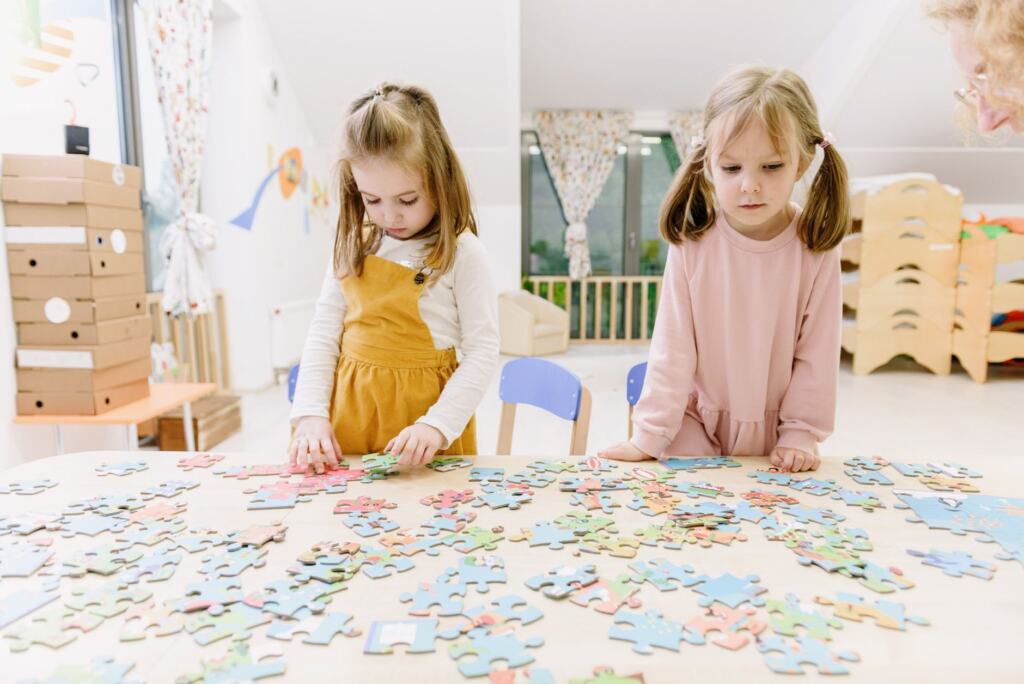
Before engineering reasoning begins, children practise the physical and visual basics. Joybuy’s guide to children’s puzzles says toddler puzzles need large, easy-to-grip pieces, simple shapes and a stable base. Those features suit hands that are still learning to hold and release.
Frame puzzles add an early spatial reasoning cue. The same guide notes that the frame and printed outlines help children see where the pieces go. That is the first version of a skill engineers use constantly: judging whether a part fits a space before forcing it.
The ratings below show how manufacturers step difficulty up in small increments. They describe jigsaw and peg puzzles, not engineering kits, so read them as a ladder of early skills rather than a shopping list.
| Puzzle | Rated age | What it offers | Planning use |
|---|---|---|---|
| hauck wooden peg puzzle | From 12 months | Fixed wooden base | Suits the earliest grasping practice, since the base stays put while small hands work. |
| HABA grasping puzzle | 12 months and up | Designed around grasping | A second option for the same stage when a peg layout is too fiddly. |
| Ravensburger My First Puzzle | 2+ | Four pictures | A first lesson in matching one piece to one picture. |
| Ravensburger 6123 Peppa puzzle | 3 and up | 15 pieces in a frame | The frame shows where pieces belong, so placement can be learned without frustration. |
| Ravensburger 7813 set | 4 and up | Two 24-piece puzzles | Offers variety and a step up in difficulty once frame puzzles feel easy. |
Ratings and product descriptions come from the product information quoted in Joybuy’s children’s puzzle guide.
Once matching and placing feel routine, the next worthwhile challenge is not more pieces but a puzzle where moving one part changes another.
Early elementary: cause and effect with moving parts
A reasonable learning target at this age is basic cause and effect: turn this, and that moves; lengthen this, and the ramp behaves differently. This is a sensible target for planning, not a measured benchmark.
A child who can already match shapes and place pieces where they belong has the groundwork for this step. The new demand is prediction. Ask the child what will happen before a part is moved, then let the puzzle confirm or correct the guess.
What suits this stage
- Gear and lever sets: turning one part drives another, which makes the link between input and output easy to see. They suit children who like to tinker and do not need the finished object to look impressive.
- Ramps and rolling tracks: a ball either reaches the end or it does not, so the result is unambiguous. They suit children who get discouraged by puzzles with several acceptable answers.
- Simple build-from-a-picture kits: a printed picture plays the same guiding role as a frame outline. They suit children who still need a visible target to work toward.
The limit at this age is the instruction load. A kit that depends on long written steps turns the activity into reading practice rather than engineering, so favour pictures and quick test-and-retry loops. Tasks that reward one correct solution are fine here; trade-offs between competing goals come later.
Middle school: build, test and compare
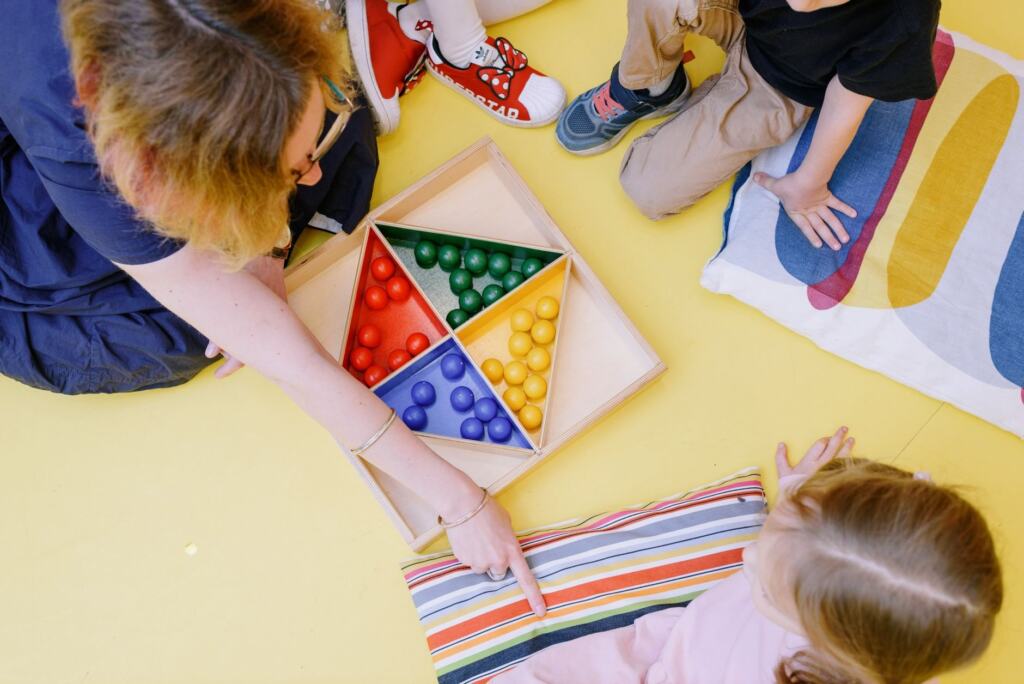
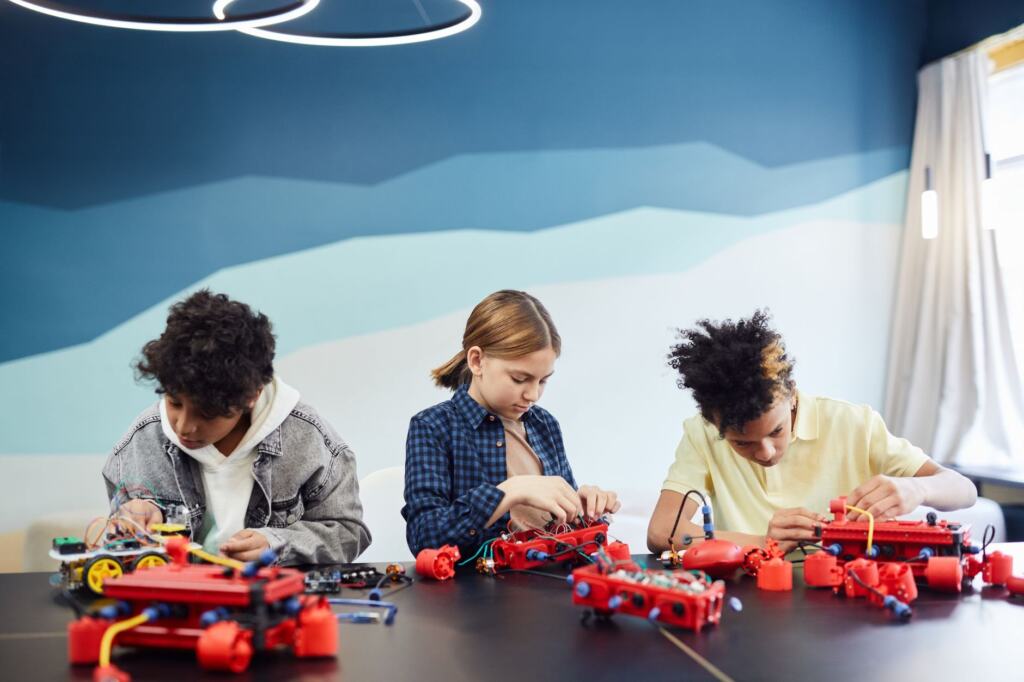
Engineering puzzles for middle school should ask students to build something, test it and explain why it behaved as it did. The strongest fits are physical challenges with a measurable result, such as a marble run built from cardboard and tape, or a motorised kit assembled from small components.
Piece count is a poor guide here. Joybuy’s guide makes the point that a piece count alone does not settle suitability, and that a puzzle with 15 or 24 pieces may suit only older children. The same logic applies upward: what matters is how much reasoning each piece demands, not how many there are.
The learning outcome to aim for is comparison. Two students build different versions, test both and say which worked better and why. That introduces the idea that every design gives something up, which is the theme of puzzles that teach design constraints.
This stage suits students who enjoy group work, because explaining a result aloud is part of the task. It is a weaker fit for a student who wants one quick answer, since the value comes from repeated testing.
High school: design iteration and circuits
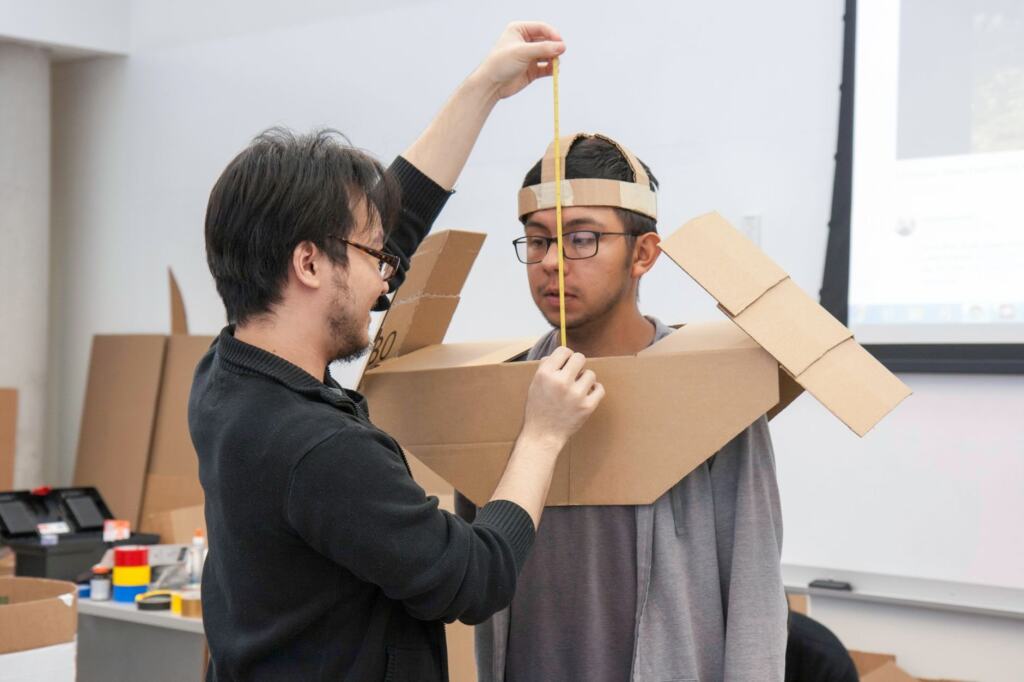
High school engineering students can work with design iteration: set a goal, build a first version, find what fails and revise. Puzzles for high school engineering students therefore need open-ended outcomes and a way to measure success, not a single correct arrangement.
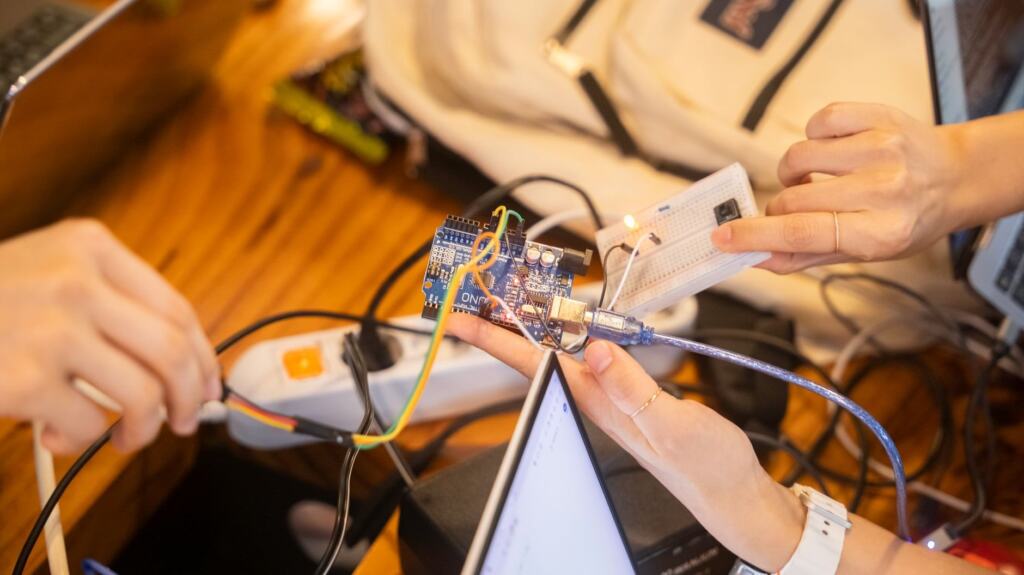
Breadboard circuits paired with a screen-based logic puzzle are a good example. The wiring is physical and the fault-finding is logical, so a student has to form a hypothesis about why a circuit is not working and test it. That is problem solving in the sense engineers use the term.
Older students also move beyond kits. Strategy and systems games make their own trade-offs visible, and our list of the best engineering puzzle games is a sensible next stop for students who have outgrown boxed kits.
The limit is time. Iteration needs several build-and-test rounds, so a short single session will mostly show a first attempt rather than a refined design.
How learning outcomes change from elementary to high school
Outcomes shift from perceiving to predicting to designing. In the early years the child learns to see how parts fit. In middle school the child tests and compares builds, and in high school the student iterates toward a goal.
Splitting learning into early, elementary, middle and teen bands is a familiar pattern. A homeschooling guide in a library catalogue record is organised into chapters for exactly those four stages. The bands are a planning convenience, though, and children move through them at different speeds.
Game-based learning works because the puzzle supplies instant feedback: the piece fits or it does not, the ball rolls or it stalls. That feedback loop is the common thread across every age band, and it is why the progression above rewards puzzles with testable results over puzzles with decorative themes.
Matching a puzzle to a child’s level
Start with the child, not the box. Joybuy’s guide advises that a puzzle should suit the child’s age, hand size and stage of development, and that the manufacturer’s age recommendation is a useful starting point. Developmental stages vary, so treat the printed age as an opening estimate and adjust from what you observe.
For a parent or teacher, this short checklist narrows the choice:
- Read the manufacturer’s age rating and treat it as the opening estimate.
- Check whether the child can already match shapes and place pieces where they belong.
- Compare the pieces with the child’s hand size, so they can be gripped and moved.
- Choose the learning outcome that fits the child’s age band: cause and effect, build and test, or iteration.
- Offer a slightly harder puzzle only after the current one feels routine.
A teacher sorting kits for a class can label boxes by age range and still keep a few harder and easier alternatives to hand. The label sets the default, and the observed skill decides who swaps.
Frequently asked questions
What should an adult do when a child gets stuck?
Point out the matching outline or picture instead of placing the piece. The guide cited above says this helps without giving away the answer, which keeps the problem solving with the child.
Can a puzzle guarantee a learning outcome?
No. A puzzle can help children practise gripping, matching and concentrating, but it cannot guarantee a particular developmental outcome or learning result. Treat the age-band outcomes above as realistic aims, not promises.
Do small parts matter when choosing a puzzle?
Yes. Small or loose parts are unsuitable for younger children, and for children under 3 the guide advises paying particular attention to warnings about small parts.