

A small team has a clever mechanic and a prototype that feels good, then stalls. The common mistakes making a puzzle game cluster by stage: thin design documents, untested levels, content added late and unclear teaching.
Concept-stage projects should start with the documents and scope sections below. Teams with playable levels should jump to testing and teaching, and teams near release to late content. The wider workflow sits in the guide to indie puzzle game development.
Thin or late design documents
A game design document that arrives late, or lacks detail, forces a team to build against guesses. A postmortem quoted in Brandon Sheffield’s 2009 Game Developer feature on past postmortems admits the Titan Quest team was still writing first-cut design documentation more than one year after the project started. Another passage in the same feature describes a fairly constant issue of design documents not being detailed enough for technical implementation.
This mistake suits the earliest stage of work, before levels exist. The practical test is whether a programmer can build each mechanic from the page without asking the designer what it does. If not, the document is not finished, however long it is.

Scope that outgrows the team
Scope creep is the steady addition of features beyond what the team can finish, and postmortems treat it as an ambition problem. The same Game Developer feature calls ambition a double-edged sword. One quoted team recovered by aggressively cutting down the scope of each feature as development progressed and keeping the features in the game. Postmortem prompts collected on Coding Horror ask the blunt version of the question: did features get axed because of scheduling pressures?
Small teams are especially exposed. The feature describes an Xbox Live Arcade title with a relatively small team handling multiple projects at once. At the extreme end, a GDC Vault postmortem of the 1979 Atari 2600 game Adventure notes that the program had to fit into a 4K-byte ROM chip. That kind of hard ceiling forces a team to decide what stays. Most modern projects have no such ceiling, so the team has to set one on purpose.
Levels approved on paper
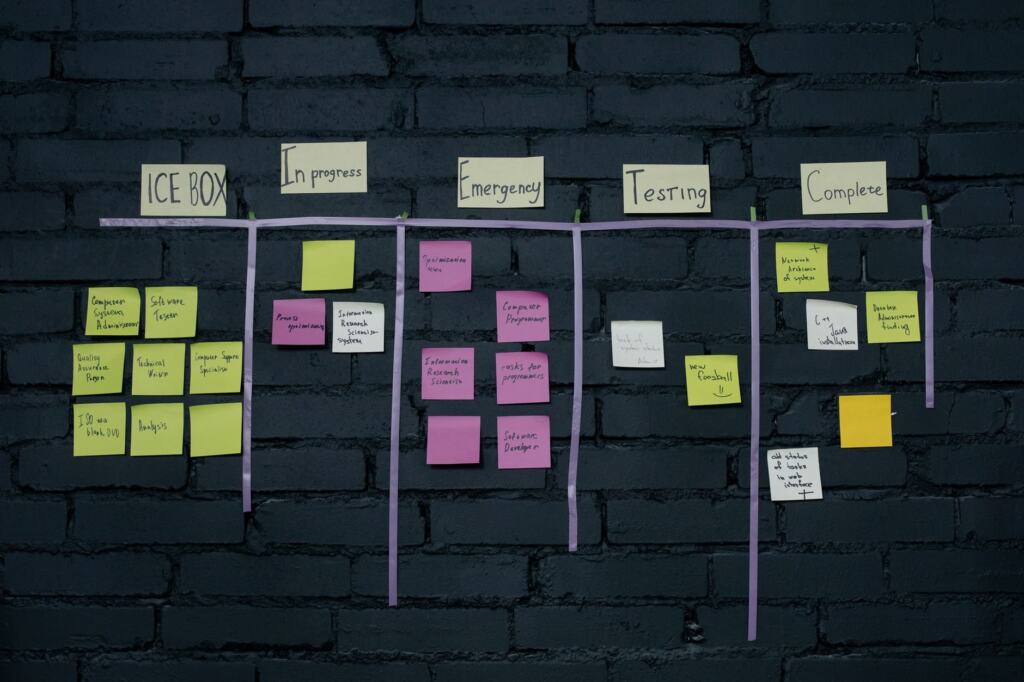
Level design that is judged on paper alone is a recurring design-process pitfall. Game Developer’s article on design process pitfalls says the outcome of any level depends on hundreds of interacting elements, which makes it hard to predict from a plan. It describes a process where designers were expected to get it right the first time, and it states that the best ideas are discovered through experiments and happy accidents.
Playtesting is the remedy that follows from this. Build a rough playable version of each level early and treat the first version as disposable. The same article also suggests that pre-production include a set amount of time for the design team to play games in their genre. That suits teams entering a crowded genre who have not studied its established levels.
A difficulty curve that cannot carry the game
A difficulty curve is the way challenge changes from level to level, and a strong opening idea does not guarantee a strong middle. The design-pitfalls article observes that games with innovative concepts can fall apart when it comes to filling up the 10-15 hours of gameplay. It holds up Call of Duty 4 as excelling at pacing and level structure, which is what keeps players engaged.
Those figures come from full-length games and are not a target for a puzzle game. The transferable lesson is to check whether the core mechanic still creates new situations late in the run, rather than repeating the early levels with bigger numbers. This suits designers whose prototype impresses in the first few minutes.
Teaching that players cannot follow
A tutorial fails when players cannot follow the rules, and the cost is frustration. A board-game design guide from Dobeta Games puts it plainly: if players can’t follow your rules, they will get frustrated. Its remedy is to test with new players. The advice comes from tabletop design, but the logic carries over to any puzzle that depends on the player understanding a rule.

Watch someone who has never seen the game attempt the opening levels without help. A designer who explains the rules aloud hides exactly the gaps this mistake creates.
Content added too late
Late content tops the list in the Game Developer feature. The feature compiled the most frequently made mistakes from postmortems, usually over five times each, covering the last three years. Content added too late ranked first, with the explanation that getting story and features right is difficult at the best of times.
For a puzzle game, content means levels, hints and teaching sequences. If most of them are still unbuilt as release approaches, the team has no time left to test them. Post-launch levels are a separate job from this production mistake, and the guide on how to add new levels to a released puzzle game covers that stage.
Communication gaps and hidden costs in small teams
An indie studio has fewer people to catch problems, so silent assumptions do more damage. One postmortem in the Game Developer feature blames a combination of lack of attention to the project, poor communication and wishful thinking for the design team believing features were further along than they were. The team found out late that they were unbuilt. A regular working build that everyone plays is the simplest check against this.
Money is a second blind spot. Dobeta Games notes that many first-time creators forget shipping, quality control or extra fees, and it recommends a budget buffer. The examples are from board games, but the habit of leaving out unglamorous costs applies to any first project.
Quick diagnosis by stage
Use the table to match a symptom to a stage before deciding what to fix.
| Stage | Mistake | Warning sign | What to check |
|---|---|---|---|
| Pre-production | Thin design document | Programmers need the designer to explain mechanics | Can each mechanic be built from the page alone? |
| Pre-production to production | Scope creep | Features are being axed under schedule pressure | Which features can be cut now rather than later? |
| Production | Levels approved on paper | Designers are expected to get it right the first time | Is there a playable version of each level? |
| Production | Weak difficulty curve | A strong concept struggles to fill the whole game | Do late levels still offer new situations? |
| Testing | Unclear teaching | New players cannot follow the rules | Can a newcomer get through the opening unaided? |
| Late production | Content added late | Story and features arrive near the end | How much is still unbuilt and untested? |
The rows draw on Game Developer’s postmortem compilation and its article on design process pitfalls.
Using postmortems as evidence
Postmortems are the raw material for lists like this one, and the Game Developer feature shows how recurring patterns emerge from them. Many of the magazine’s postmortems have also been compiled in the book Postmortems from Game Developer, as Coding Horror notes. A single postmortem can reflect one team’s circumstances, so trust the mistakes that appear repeatedly across several.
Read them for stage, not just for topic. A mistake that appears in pre-production is cheaper to fix than the same mistake found at release, which is why the checklist below starts with the stage.
Decision checklist
- Locate the stage. Concept only, playable levels, or near release.
- Concept stage: start with the design document and scope sections.
- Levels exist: start with the paper-approval and difficulty-curve sections.
- Near release: start with the teaching and late-content sections.
- Any stage: read the team-communication section before the next milestone.
Frequently asked questions
What are the most common mistakes when making a puzzle game?
Postmortem material points to late content, thin design documents, scope beyond the team’s capacity, levels never tested in play and tutorials new players cannot follow. The table above sorts them by stage.
Why do puzzle games fail commercially?
Game Developer’s design-pitfalls article says success or failure is generally not due to a great mechanic or a new idea, but to competent execution. Coding Horror describes game development as a pressure cooker with unclear goals under intense deadlines. Whether a demo helps sales is a separate question, covered under does a demo increase sales indie game.
What do developers say they learned from their first indie game?
Postmortem guidance on Coding Horror centres the write-up on a “5 wrongs, 5 rights” structure. It warns that postmortems which sugar coat the “what went wrong” sections are dismissed by readers. The most useful first-game lessons are therefore specific failures, such as the ones above.