

| Phase | What to settle | Planning use |
|---|---|---|
| Concept | Early levels must teach the mechanic, and each level should be beatable without frustration. | Put your best design effort into the opening levels before you plan later ones. |
| Build | Designers create and test levels in the level editor against balance sheets. | Move from sketch to editor early, so you play the level instead of only imagining it. |
| Playtest | Levels need other people to play them and to withstand peer feedback. | Schedule outside testers before you decide which levels to keep. |
| Measure | Attempts per level work better as a difficulty measure than pass rate. | Log attempts from the first test build onward. |
| Scale | One studio supplies 40 to 80 levels per month in live-ops, delivered as tested batches, usually weekly. | Treat that as a production-pipeline benchmark, not a launch target for a small game. |
The practices above come from Room 8 Studio’s article on tile puzzle level design and Game Revenant’s level design post.
Puzzle game level design works best when each level has one idea, a solution a player can actually reach, and evidence from real playtesters. Build in an editor, test with other people, then refine from what they do.
This guide follows a single level from first constraint to post-launch review. For the wider production workflow, see indie puzzle game development.
Concept phase: constraint and a reachable solution
A puzzle level is a constraint with an answer. Decide what the player is not allowed to do, then check that one clear route to the goal still exists.

Start from the constraint
Pick the single idea the level exists to show. The idea might be a mechanic, a new interaction between two familiar pieces or a trap that punishes an obvious first move. If you cannot say it in one sentence, the level is probably carrying several ideas, and players will not know which one they are meant to learn. Need raw material for those ideas? The list of puzzle game mechanic ideas is a good place to start.
Keep the solution reachable
Game Revenant’s developers state that beating a level should be easy enough that players will beat it. A level can be demanding, but it should not leave players guessing whether a solution exists. If the designer cannot reproduce the intended solution in the editor on demand, the level is not ready for anyone else.
Studying existing puzzle levels
Existing puzzle levels are the cheapest research you can do, and the opening levels teach the most. Game Revenant notes that the levels with the most playtime overall are the first levels, hands down, and that a game which does not teach its mechanics well in those first few levels loses players early.
When you play a reference puzzle game, work through it as a designer would:
- Name the lesson. Write down the single thing each early level teaches, and check whether a player could fail to notice it.
- Spot the safe space. Note where the level lets you experiment without a penalty before it asks you to apply the idea.
- Trace the change. Compare consecutive levels and identify what was added or removed. That difference is the design decision you can reuse.
Copy the structure of a lesson, never the layout. The aim is to understand why a level works, so you can build your own around a different idea.
Building several levels around a single mechanic
One mechanic can carry a long run of levels if each level changes how the player has to use it. A studio’s level designer job listing asks for the ability to take a single game mechanic and explore its depth through hundreds of unique level variations. That describes how much a mechanic can yield. It is not a target for a first release.
- Write the mechanic as a short rule, and list the options it gives the player.
- Open with a level that makes the mechanic hard to miss and cheap to try.
- Change one condition per following level: a tighter space, a new obstacle, or a different goal position.
- Combine the mechanic with another only after players have used it alone in several ways.
- Cut any variation that has the same solution as one already in the set.
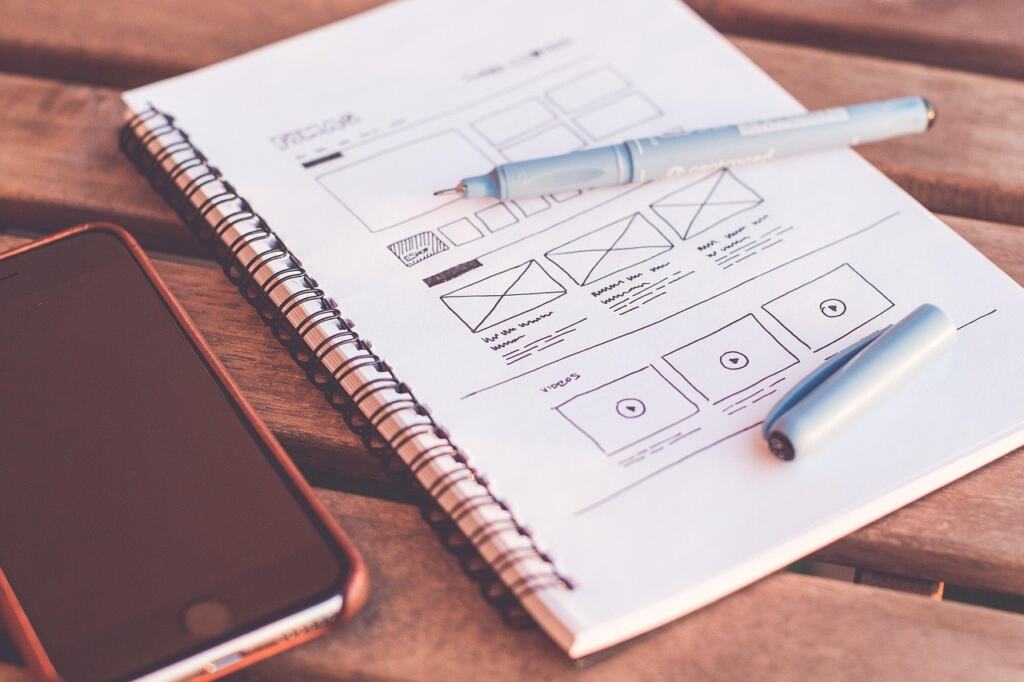
Sketching a set side by side shows quickly which levels are duplicates. It also shows where one step asks too much of the player. How those steps add up across the whole game is a separate question, covered in the guide to the puzzle game difficulty curve.
Build phase: level editor and tilemap
Build each level in the editor you will ship with, and play it as soon as it exists. The same job listing asks for someone comfortable working within Unity and using proprietary level editors or tile-based tools. For a grid puzzle, a tilemap in Unity is a sensible foundation, because every level is then a set of tiles you can edit, reset and replay quickly.
Room 8 Studio describes its designers as creating and testing levels internally in the level editor according to the balance sheets. The practical lesson is that building and first testing happen in the same place. You find an unreachable goal or a broken layout at once, not after the level has gone to outside testers.

Playtest phase: watching where players stall
Playtesting is the only reliable way to learn whether a level works for someone who did not design it. Game Revenant’s post makes the point that you cannot judge a level unless you let people test it out. It adds that every level design, however good, needs to withstand the feedback of its peers.
A studio hiring designers also lists rigorous playtesting to ensure every level feels fair, fun and functional as part of the job. Fair, fun and functional gives you three separate questions to ask of each tester session.
- Hand over a build with no hints and say nothing about the solution.
- Watch the screen and mark the moment the player stops, backtracks or tries the same move repeatedly.
- Afterwards, ask what they thought the level wanted from them.
- Fix the cause, whether that is a confusing layout or a missing lesson. Then test again with someone who has not seen the level.
Expect to lose levels. The Game Revenant team designed around 30 levels for Where Shadows Slumber and kept about 15. A level that fails tests is evidence about the design, so cutting it is progress.
Checking for a clear solution and reading the numbers
A level has a clear solution when you can complete it yourself on demand. Once testers are playing, numbers help you find the levels that fall short. Room 8 Studio advises switching from the pass rate to defining a number of attempts per level as the difficulty measure.
| Metric | What it shows | Planning use |
|---|---|---|
| Attempts per level | How many tries players need before they pass. | Use it as the main difficulty index and compare levels in the same stretch of the game. |
| Win rate per attempt and average attempts to complete | How often a try succeeds and how long completion takes. | Read the two together, so an average is never judged without the success rate beside it. |
| Near-miss rate | How often a loss happens within one or two moves of the goal. | Check it on levels that feel too hard to see whether players are close or lost. |
The first metric comes from Room 8 Studio, and the win-rate and near-miss measures are described in a puzzle game development guide from iLogos.
These numbers point to a problem but do not explain it. A level with a high attempt count could be hard in an interesting way or unclear in a frustrating way. Return to the observation notes from the playtest to tell the two apart.
Scaling the level count
How many levels a puzzle game needs depends on how you plan to keep players. There is no single number to hit. A live-ops game feeds players a steady stream of content, while a smaller premium game ships a complete, curated set.

At the live-ops end, Room 8 Studio reports that it provides from 40 to 80 levels per month and delivers batches of tested, polished levels, usually weekly. A studio hiring designers describes the work as mapping the player journey across hundreds of levels. One development guide says content volume drives lifespan, with thousands of levels that keep difficulty in a narrow band.
For an indie team, the practical reading is to design the level set you can test thoroughly. Nobody can polish levels at studio volume without a pipeline for building, testing and measuring them.
Frequently asked questions
Should I generate puzzle levels procedurally?
For tile puzzles, hand-crafting is the safer default. Room 8 Studio reports that generated levels were either impossible to pass, too easy, or just dull, and that the industry now sticks to crafting its levels manually. Teams that do generate often use seeded or weighted generation so that a level can be tuned to a target win rate.
What happens to levels after a soft launch?
They get a second pass driven by real player data. Room 8 Studio says that after the soft launch it asks for users’ statistical data, and a studio hiring designers lists analyzing live level performance metrics and re-balancing existing levels as a core duty.
Who should test my levels?
Anyone who did not build them. Peers are a good start, since every level design needs to withstand the feedback of its peers. Players who have never seen the level show you whether the lesson is clear without your explanation.