
A student who can lift a heavy load with a long lever but cannot say why needs puzzles that teach mechanical advantage one concept at a time: balance puzzles for torque, pulley and gear puzzles for force multiplication.
Quick answer: start with lever and balance puzzles, move to pulleys, then try crank and gear puzzles. At every step, the learner should track how far the input moves as well as how hard it is pushed. This guide belongs to the wider collection of educational puzzles for kids.
Puzzle types compared by the concept they make tangible
Each puzzle type below isolates a different idea. Choosing by concept, rather than by title, tells a parent or teacher what the learner should be noticing while they play.
| Puzzle type | Concept made tangible | What the learner should notice | Planning use |
|---|---|---|---|
| Lever and balance puzzles | Torque and the fulcrum | The ratio of lever lengths on either side of the pivot decides how much force is needed | Best first step; works with a bar, a pivot and weights |
| Pulley puzzles | Force multiplication through rope | Each set of grooved disks increases the rope length pulled and reduces the force needed | Suits hands-on builds; the TeachEngineering activity is pitched at Grades 3-5 |
| Wheel-and-axle and crank puzzles | Turning force | A large outer wheel magnifies the turning force on a smaller axle | Good for testing torque directly with a handle |
| Gear-train puzzles | Turning force passed between wheels | The input travels a different distance from the output | Best after levers and pulleys, once the force-distance trade is familiar |
The concepts and grade ranges in this table come from the Pennsylvania Department of Education lesson on simple machines and the TeachEngineering pulley activity.
Mechanical advantage in plain terms
Mechanical advantage is the ratio of the output force a machine produces to the input force applied to it, so it is a unitless number. In simple terms, it tells a student how much a machine multiplies their push.
The same lesson makes the key correction: work equals force times distance (W = F x D), so a machine lets a person do the same work with less force over a greater distance. Any puzzle that claims to give free strength is hiding a longer path somewhere. Good puzzles make that longer path visible, and the checklist near the end of this guide turns it into a routine for the learner.
Lever and balance puzzles for torque
A lever is a bar that rotates on a fixed point, its fulcrum or pivot point. That makes it the cleanest way to show how a longer lever needs less force, because the learner can move the pivot or the hand position and feel the result.
The Pennsylvania lesson states that the mechanical advantage of a Class 1 lever is the ratio between the lengths of the lever on either side of the fulcrum. It also quotes Archimedes: a lever long enough and a suitable fulcrum can move any weight. A balance puzzle turns this into a task. The learner hangs weights at different distances from the pivot and sees that a small weight far out can balance a larger weight close in.
Look for puzzles where the learner can slide the fulcrum or the load, because fixed beams only confirm a rule instead of letting the student discover it. These puzzles suit students who are meeting torque for the first time, since the turning effect depends on both the force and its distance from the pivot. Students who then want to explore stability can move on to balance puzzles that teach center of mass, which build on the same beams and pivots.
The limit of lever puzzles is that they show one machine in one direction. A learner can finish a balance puzzle without ever connecting it to the force-distance trade, so ask them to explain which side moved farther.
Pulley puzzles for force multiplication
Pulleys are grooved wheels that change the direction of a pull and increase the capacity for lifting weight. They teach force multiplication in a way levers cannot, because the trade shows up as rope the learner has to haul.
According to the Pennsylvania lesson, each set of grooved disks that the rope is threaded through increases the distance the rope has to be pulled and reduces the force needed. A puzzle that lets students add or remove pulley sets while lifting the same load lets them feel that trade directly. The thing to notice is the growing pile of rope in their hands as the lift gets easier.
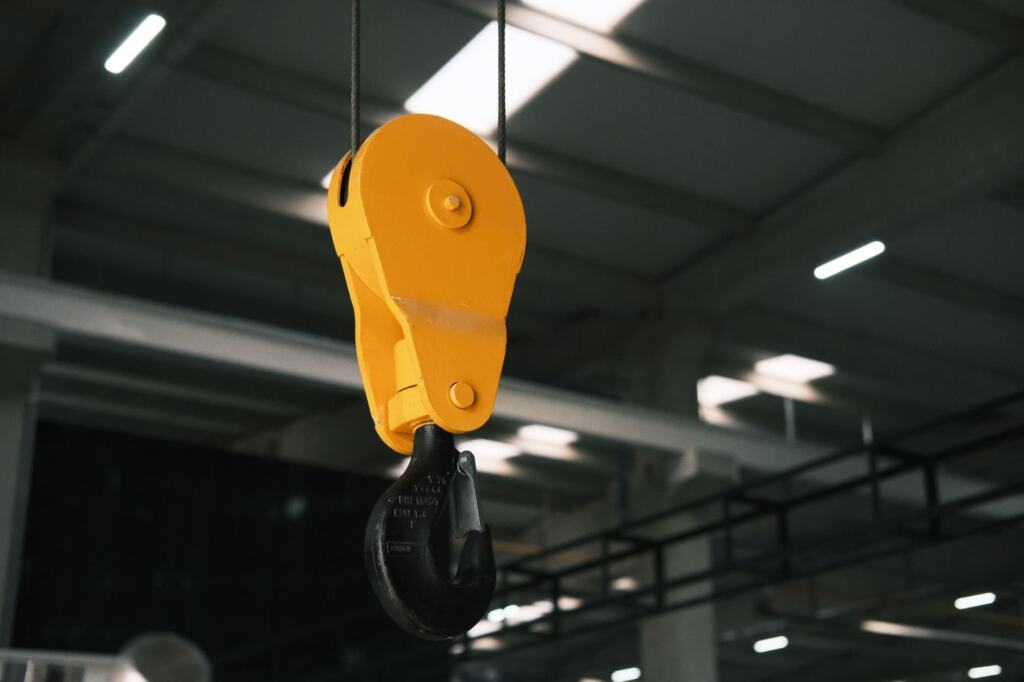
Pulley puzzles suit students who learn by building. The TeachEngineering activity supplies each group with platforms, hooks, nuts, a drill bit and string to construct one pulley system, and it is labelled as a hands-on activity for Grades 3-5. Younger learners can therefore start here, provided an adult manages the tools.
Wheel-and-axle and crank puzzles for testing torque directly
For students who want to test torque themselves, a puzzle with a handle or crank is the most direct choice. The Pennsylvania lesson explains that turning the large outer wheel magnifies the turning force applied to the smaller central axle.
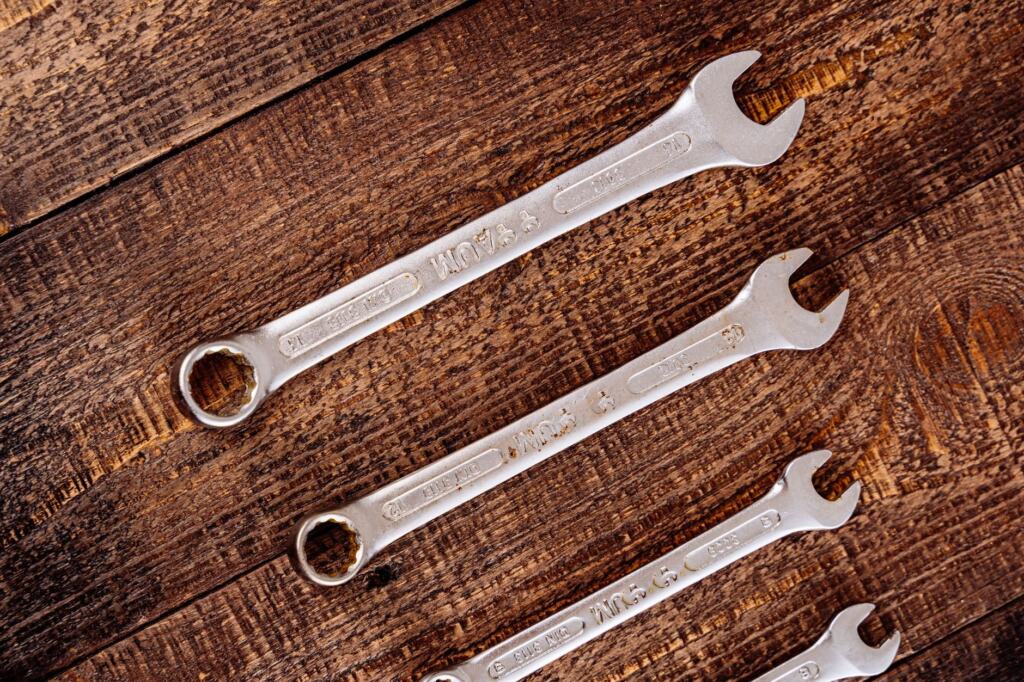
The learner should compare a long crank handle with a short one on the same mechanism, noting which feels lighter and which turns the axle through more handle travel. Wrenches show the same idea in a workshop, which is why a long wrench loosens a stubborn bolt more easily than a short one. Because the effect is felt in the hand, this category suits younger students who do not yet read formulas.
The limitation is that a crank puzzle rarely shows numbers. Pair it with a simple question, such as which handle needed less push and which travelled farther, so that the feeling becomes a concept.
Gear-train puzzles
Gear puzzles extend the wheel-and-axle idea by passing turning force from one wheel to the next. The distinction from pulleys is what the learner handles. A pulley puzzle trades force for rope length in a straight pull, while a gear puzzle trades force for turning distance around a wheel.
On a gear board, the learner should compare how far the input handle turns with how far the output moves. Because the work stays the same with or without mechanical advantage, the output cannot gain force without giving up distance somewhere.
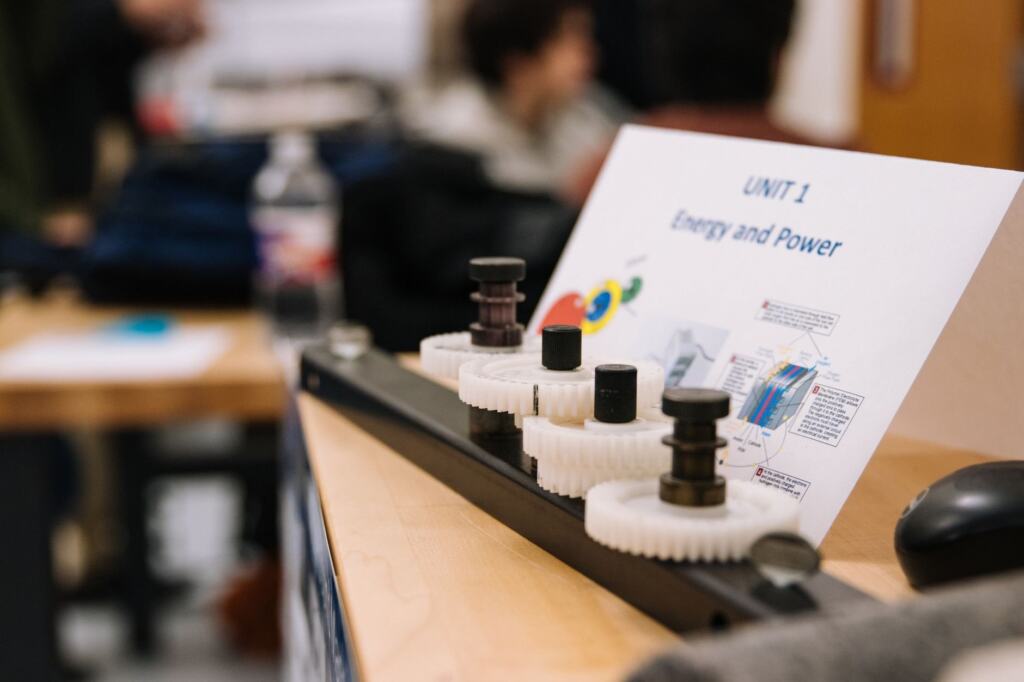
Gear puzzles suit students who already grasp levers and pulleys, since several turning parts make the force-distance trade harder to see at a glance. For beginners, a single pair of gears is clearer than a long train.
Hands-on builds and the age to start
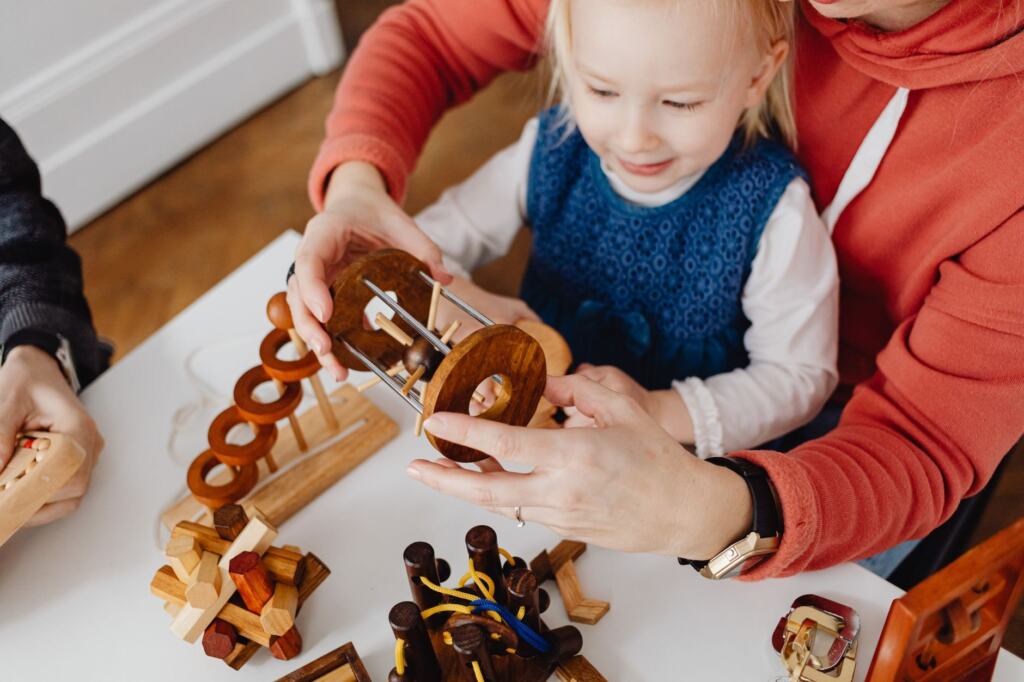
Students can start learning torque through play earlier than formulas suggest. The pulley activity on TeachEngineering is rated for Grades 3-5, while the Pennsylvania lesson on simple machines targets 8th grade and runs for 45 minutes or 2 class periods. That gap points to a sensible path: feel the effect first with handles and ropes, then name it with ratios and work in the middle-school years.
Programmable builds are an option for classrooms with a budget. The TeachEngineering activity uses LEGO EV3 bricks for its pulley work, which makes it more of a project than a puzzle. Older learners moving toward reasoning-heavy play can also look at critical thinking games for teenagers.
Decision checklist for choosing a puzzle
- Name the concept. Choose levers or balance for torque, and pulleys or gears for force multiplication.
- Check the starting level. Younger learners do best with handles and rope; ratios belong with older students.
- Look for adjustable parts. Sliding fulcrums, removable pulleys and swappable cranks let students discover the trade for themselves.
- Ask about distance. After each attempt, have the learner say how far the input moved compared with the output.
- Move up one step at a time. Progress from a single lever to a pulley, then to a crank, then to a gear train.
Frequently asked questions
Which machines count as simple machines?
By some analyses there are four simple machines: the lever, the inclined plane, the wheel-and-axle and the pulley, according to the Pennsylvania Department of Education lesson. Puzzles in this guide cover three of them directly.
Why does a claw hammer count as a lever example?
The Pennsylvania lesson notes that pulling the handle several inches with moderate force moves the claw about an inch. The long handle trades distance for force at the claw, which makes the hammer a useful real-world companion to a balance puzzle.
How much does a hands-on pulley build cost?
The TeachEngineering activity lists two LEGO EV3 Intelligent Bricks at $145 each, plus about $100 in additional parts. Simpler rope-and-hook pulley kits avoid the programmable bricks.
Do the lesson plans match curriculum standards?
The Pennsylvania lesson plan has no academic standards assigned to it, so teachers need to match it to their own force and simple-machines standards before using it in class.