
Faced with a pile of mental rotation puzzles, start easy: turned letters or hand-held blocks first, then timed same-or-mirror drills, then cube-stack pairs and Mental Rotations Test-style sets. Pick the format that matches your goal.
The list below runs roughly from gentlest to hardest, with a format label (paper, physical or digital) and a difficulty note on each entry. It suits adults brushing up for a test as well as parents choosing from the wider range of educational puzzles for kids.
How mental rotation puzzles work
Mental rotation is the skill of turning an object around in the mind to see whether it matches another. The Stanford Encyclopedia of Philosophy credits Shepard and Metzler (1971) with introducing the concept into cognitive science. Their stimuli were pairs of drawings of three-dimensional, asymmetrical assemblages of cubes, and the question was whether the two objects were identical apart from rotation or were mirror images.
The central finding is what makes practice measurable. In the original paper, recognition time rose linearly with the angular difference between the two drawings, and turning a figure within the picture plane was no quicker than turning it in depth. A bigger turn therefore costs more thinking time, and a flat sheet gives no shortcut.
Researchers use such tasks to quantify an aspect of spatial skills and reasoning, as Labvanced’s overview of 2D and 3D rotation tasks explains. That is why the same-or-mirror judgment sits behind almost every exercise below. Each entry changes the stimulus, the format or the pressure.
Rotated letters and simple shapes (paper or screen, beginner)
Cooper and Shepard’s follow-up work used a letter of the alphabet rotated out of its normal, upright orientation, and the participant judged whether it was the normal or the mirrored form, per the Stanford Encyclopedia entry. A letter is a familiar object, so the only new demand is the turn.
This suits first-timers and anyone who finds cube drawings baffling. Print or sketch letters at a tilt, decide which are mirrored, then check. The limit is depth: letters turn in a flat plane, so they build the habit of mentally turning something, not the 3D skill that cube stacks demand. Labvanced notes that research stimuli also include animals, faces, colored shapes and pseudo-letters, so a mixed sheet of simple shapes is a reasonable variation.
Interlocking blocks and physical builds (physical, beginner to intermediate)
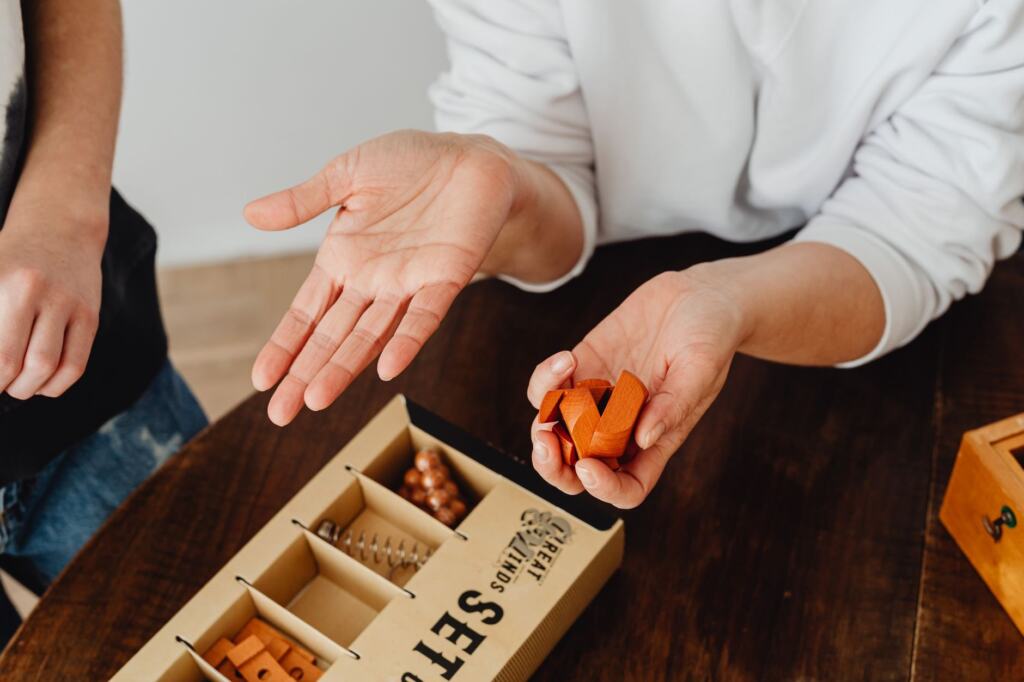
Wooden interlocking blocks and cube-built figures are the closest hands-on relatives of the original cube assemblages. Build a shape, put it out of sight, then try to predict how a turned copy will look before you turn the real one. The object gives immediate feedback, which a printed sheet cannot.

Labvanced reports that 3-year-olds can begin to perform the rotation task above chance level, so building play is a sensible entry point for young children. Physical sets are less standardised than a test, so progress is harder to score. Use them to build comfort, then move to something timed. Parents weighing the learning value of play can also read about teaching iteration and failure with puzzle games, since block building rewards trying, turning and trying again.
Right Turn same-or-mirror drills (digital, intermediate and scalable)
BrainHQ’s Right Turn exercise targets spatial rotation skills. It shows two images side by side, and the task is to decide whether they are the same or mirror images of each other. The score is the number of milliseconds the image pair is on screen, so a better score means a shorter exposure.
Difficulty rises as the original and mirror images become more similar and the time allowed falls. That makes it a good fit for people who want a visible measure of progress. It is a commercial brain-training product, so check what is available without a subscription before planning a routine around it.
Free online quizzes and tests (digital, beginner to intermediate)
Free options exist for a quick check. A ProProfs mental rotation task quiz lists 10 questions and has recorded 53,661 attempts, which shows it is widely used. Its short length makes it a warm-up, not a thorough assessment, and an attempt count says nothing about quality.
The research side shows the format travels well. Labvanced describes administering the test online for remote studies, and also running it locally without an internet connection using a desktop app. For readers searching for mental rotation games online, the practical advice is to prefer tools that report your time or accuracy, since the rotation-angle effect is about speed and correctness together.
Cube-stack pair sheets (paper, intermediate to hard)
Cube stack puzzles in the Shepard and Metzler style show two drawn assemblages and ask whether they are the same object turned or a mirror image. Sheets of these pairs are the classic paper exercise. They suit people who want to train the exact skill the early experiments measured.
Work through each pair by picking one distinctive arm of the figure, tracking where it ends up, then checking whether the remaining cubes agree. Because response time grew in direct proportion to the angular difference between the two shapes, larger turns will feel slower. That is normal, not a sign of failure. Self-checking is the limit of paper: without an answer key, a wrong habit can go uncorrected, so keep a key or a physical model beside you.
Mental Rotations Test-style practice (paper or digital, hardest)
Steven Vandenberg and Allan Kuse formalized the Mental Rotations Test in 1978. According to Labvanced, it was a 20-item test in which the participant compares four figures and selects two choices. The target-versus-options layout is quite different from a simple pair, so practice with the same layout rather than relying on pair drills alone.
To prepare, move through these stages in order:
- Pair drills first. Make sure you can judge a single turned pair quickly before adding the extra options.
- Four-figure layouts next. Practise picking the two matching figures from four, so the selection format stops being a distraction.
- Timing last. Add a time limit only once accuracy is steady, using the limit given by the test you will actually sit.
Labvanced also describes a chronometric variant that presents two stimuli instead of four with varying angular disparity, which is useful for measuring reaction time rather than scoring a paper test. Expect score differences between people: Labvanced states that males have a cognitive advantage on 2D and 3D rotation tasks, so compare yourself with your own earlier results.

Rotating 3D models in free CAD software (digital, applied)
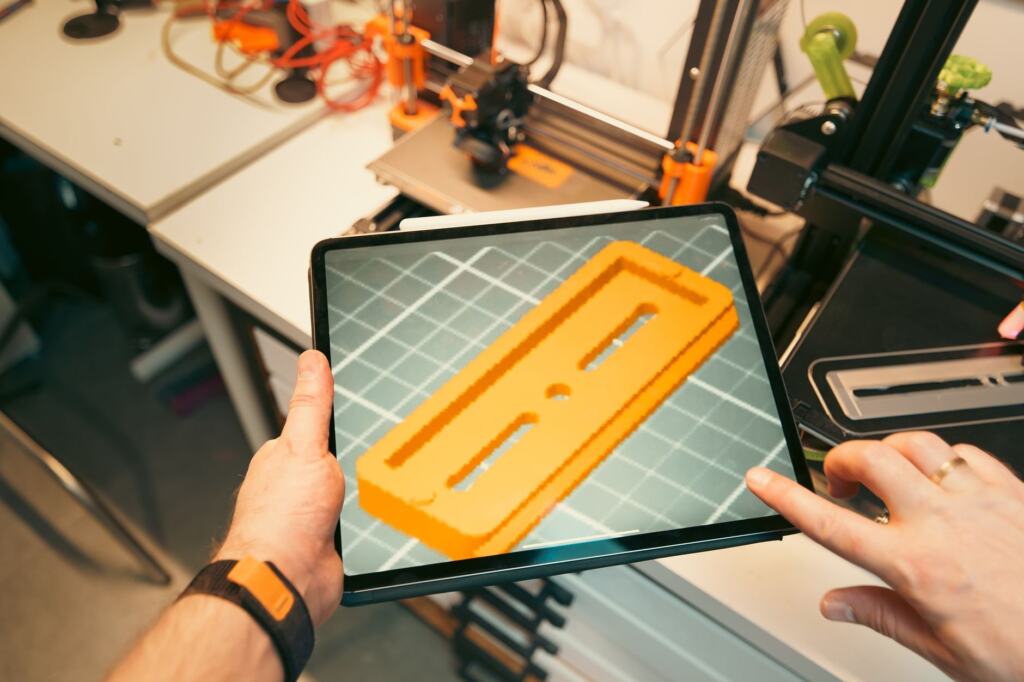
Orbiting a 3D model of a machine part on screen is not a test, but it is the real-world version of the skill. You can predict what a part looks like from another side, then spin it to check. This suits students heading into engineering, where why is spatial reasoning important for engineering is answered by everyday design work.

Its limit is that it offers no built-in score, so pair it with a timed exercise from earlier in this list. BrainHQ links mental rotation to everyday situations in which brain performance matters, such as packing and finding your way, which is a reminder that the skill has uses beyond puzzles.
What training research shows
Evidence on practice is encouraging but narrow. Labvanced cites a 1-week online training intervention with mental rotation spatial training for 6- and 7-year-olds. The trained group showed improved performance on certain arithmetic problems compared with a literacy-trained control group. That supports short, regular online sessions for young children and suggests rotation practice may carry over to other tasks.
It does not give an adult timetable, a guaranteed gain or a ranking of online games against physical puzzles. A sensible plan is to mix both: physical turning for understanding, timed digital or paper drills for measurable progress. Track one number, such as the Right Turn millisecond score or the time taken for a sheet, rather than relying on feel.
Decision checklist
- Start with turned letters or hand-held blocks if you are new to the task or choosing for a young child.
- Add a timed same-or-mirror drill once those feel easy, so improvement shows up as a number.
- Switch to cube-stack pair sheets if your goal is the classic 3D skill.
- Practise the four-figure layout if you are preparing for a Mental Rotations Test-style assessment.
- Use free CAD software if your interest is engineering, and keep one timed drill alongside it.
Frequently asked questions
Is a score from a short online quiz meaningful?
It works as a warm-up and a rough personal baseline. A 10-question quiz is far shorter than the 20-item Mental Rotations Test, so compare it only with your own later attempts at the same quiz.
Can young children try rotation tasks?
Yes. Labvanced reports that 3-year-olds can begin to perform the task above chance level, and its summary of a training study included 6- and 7-year-olds. Hands-on blocks are the gentlest starting point.
Does turning a shape flat on the page make it easier than turning it in depth?
Not according to the original experiments. The 1971 paper found that judging a turn within the picture plane was no quicker than judging a turn in depth.
What does a better Right Turn score look like?
BrainHQ scores the exercise by the number of milliseconds the image pair is on screen, so a shorter exposure at the same accuracy marks improvement.