
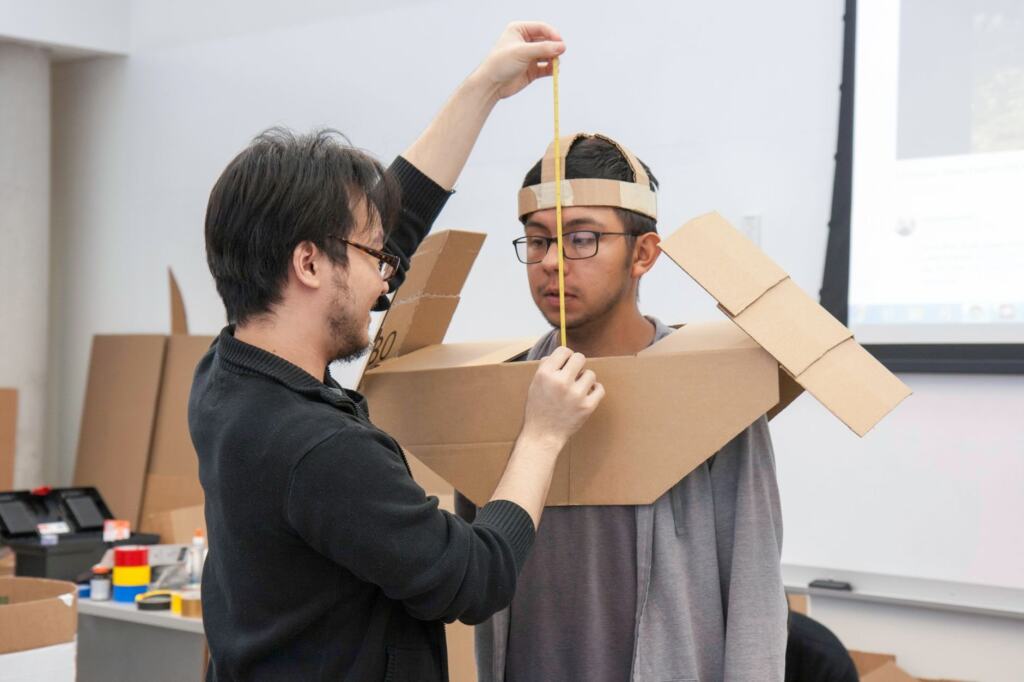
Teaching iteration and failure with puzzle games works when students treat each failed attempt as data: change a single variable, retry, and record what happened. Fast retries help, but the habit needs a teacher to prompt it.
This guide is part of the wider set of educational puzzles for kids that build engineering habits. It explains how a retry loop produces learning, where puzzles fit alongside other classroom activities, and what to do when a student keeps failing.
Trial and error versus iteration
Trial and error is the raw material, and iteration is the disciplined version of it. A university-affiliated school resource on project-based activities describes trial and error as not only natural but essential to learning. Students will do it unprompted. A Rubik’s-cube-style puzzle invites it from the first move.

Iteration adds direction. A professional-development article describes the practice as adapting and iterating based on failure in a flexible and agile way. The attempt that failed shapes the next attempt. The working distinction in this guide is that random trial and error changes everything at once, while iteration changes a single variable, observes the result and keeps a record. That framing is a teaching judgement built on those descriptions, not a finding from a named study.
| Approach | What the student does | Planning use |
|---|---|---|
| Trial and error | Tries moves with little link to the last result | Fine for early exploration of a new puzzle; expect it and do not discourage it |
| Iteration | Adapts the next attempt based on what failed, in a flexible way | Introduce once students can name what went wrong; add the single-variable rule and a written record |
The descriptions come from the project-based activities resource and the failure-and-iteration article.
How a retry loop turns failure into feedback
A feedback loop exists when a failed attempt tells the student something usable. The project-based activities resource says failure can serve as a feedback mechanism that steers individuals toward success. Puzzles suit this well because the result of a move is visible straight away, so the link between action and outcome stays clear.

A structured retry follows ordered stages:
- Attempt. The student makes a move or builds a version and sees the outcome.
- Diagnose. The student states what went wrong. The failure-and-iteration article advises focusing on the underlying causes, the assumptions, and the feedback rather than on blame.
- Change a single variable. The student alters only the element the diagnosis points to, so the next result can be traced to that change.
- Retry. A short loop keeps the cost of a failed attempt low, which makes the next try easier to start.
- Record. The student writes down what was changed and what happened, so the next attempt builds on evidence and not on memory.
The recording stage is the one most often skipped. Without it, a student who solves a level has a solution but no account of how the thinking improved.
Puzzle games with fast retry loops
Puzzles with quick resets give students many cycles of the loop in a short session. A physical puzzle such as a cube can be turned and tried again at once. A digital puzzle that restarts a level after a failed attempt does the same, and the failed run becomes information about the rule that was misread.
Choose puzzles by what the retry teaches. Spatial puzzles such as mental rotation puzzles reward students who test a rotation, check it and adjust. Diagram-based challenges, including puzzles that teach reading technical drawings, reward students who revisit the drawing after a wrong prediction. In both, the useful moment is the pause after failure, not the solved screen.
Fast retries alone do not guarantee iteration. The teacher’s job is to slow that moment down with a diagnosing question and a written note.
Beyond puzzles: prototypes and the engineering design process
Puzzles practise the loop in a contained setting, and building activities extend it to the engineering design process. An engineering improvisation resource from eCampusOntario links its failure activities to the engineering design thinking process, and one of its activities is repeated until the group completes it successfully. Repetition until success is the same logic as a puzzle level that will not advance until the rule is understood.
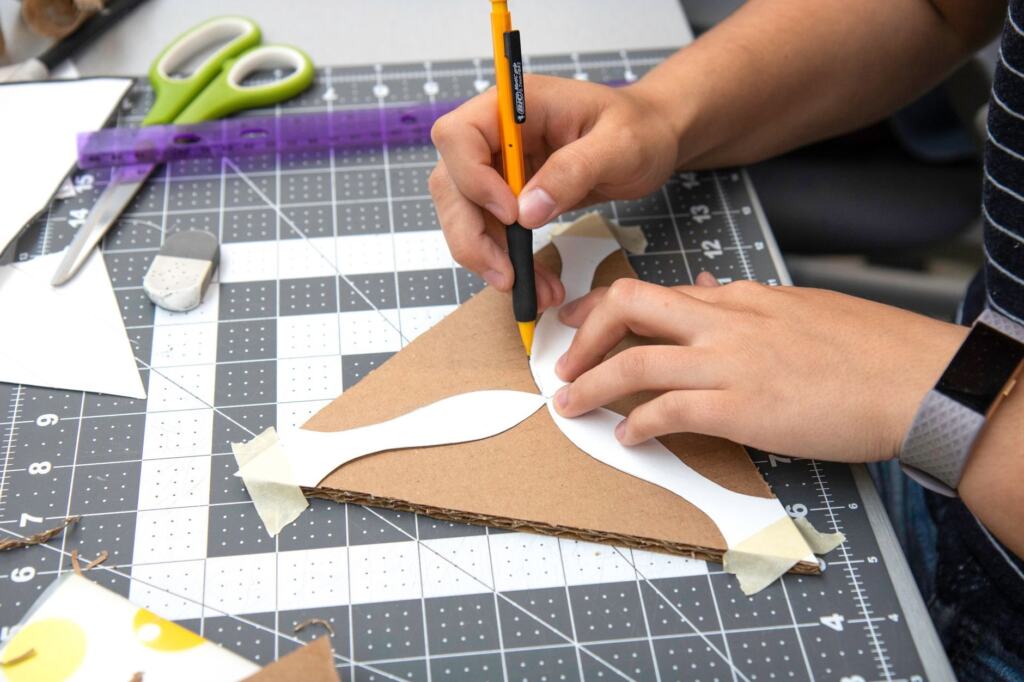
A prototype is the building equivalent of a puzzle attempt. The failure-and-iteration article suggests rapid prototyping to get customer feedback. In a classroom, a cardboard or paper prototype is cheap to rebuild, so students can afford to be wrong and rebuild. Cheap materials keep the retry loop short in the same way a level reset does.
Building a growth mindset through retries
A growth mindset in STEM class is built by how failure is handled, not by the activity alone. The project-based activities resource reports that when failure is reframed, participants are less likely to fear failure and more willing to take calculated risks. It adds that participants develop better problem-solving skills as they learn from their mistakes. That is the core of productive failure: a mistake that is examined, not hidden.
The failure-and-iteration article calls failure a powerful catalyst for learning, growth, and innovation. The activities that fit this goal share a pattern: a clear way to fail safely, a quick way to try again and a habit of explaining what changed. Puzzle sessions, rebuild-and-retest prototype tasks and repeat-until-success group activities all fit.
When a student keeps failing
Repeated failure is the point at which the teacher’s response matters most. The project-based activities resource advises prompting reflection with questions like “What went wrong?” and responding in ways that guide them toward understanding how they can improve. Giving the answer directly removes the diagnosis step that builds the habit.

- Ask before telling. Start with what the student thinks failed, then ask which single variable to change next.
- Look at the record. A student with notes on previous attempts can see patterns, such as repeating a change that did not help. A student without notes cannot.
- Share failures publicly. The failure-and-iteration article recommends forums such as a weekly debrief, a failure wall, or a fail fest, which show students that others are failing and learning too.
Honest limits
The supporting material describes project-based work, engineering improvisation and team practice, not controlled studies of puzzle games. Puzzle retry loops are therefore best treated as practice for the habit of structured retrying. Whether that habit transfers to engineering projects depends on the teacher prompting diagnosis, a single change and a record each time. A puzzle that students can win by clicking at random teaches little about iteration, so match the puzzle to a loop where each failure carries information.
Frequently asked questions
What is a failure wall?
It is a shared space for posting failed attempts and what they taught. The failure-and-iteration article lists it alongside weekly debriefs and fail fests as ways to share failures openly.
Which tools help students analyse a failed attempt?
The same article names the 5 whys, the fishbone diagram and the after-action review. A short “why did that fail” chain suits younger students, and a diagram of possible causes suits a larger build.
Is failure a sign that a project is going wrong?
Not necessarily. The project-based activities resource states that mistakes are inevitable, so what matters is how the class responds to them.